.png)
The Orbán Legacy: 16 Years of Success vs the 2026 Fall
The factors behind sixteen years of political stability — and the conditions that ended them
Between 2010 and 2026, Hungary under Viktor Orbán represented one of the most studied cases of political consolidation in modern Europe. Understanding how that model sustained itself — and what ultimately disrupted it — requires looking at structural factors rather than ideological ones.

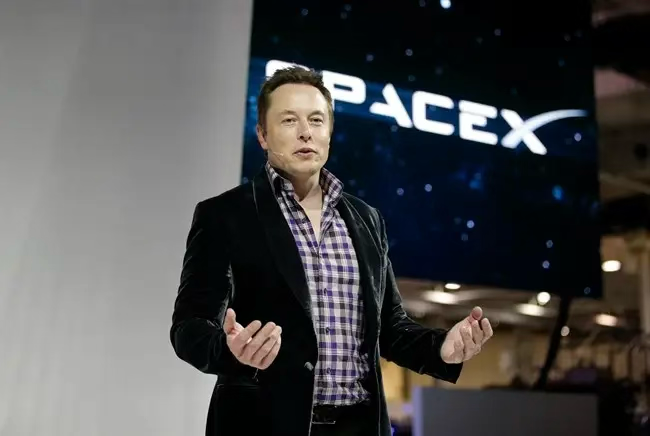
Annual press conference, Hungarian Prime Minister Viktor Orbán January 2026
Why the system held for so long
The government's longevity rested on a combination of economic policy and institutional design. In its early years, the administration delivered tangible material benefits — regulated utility prices, family tax incentives, and steady GDP growth — which generated durable support among middle-income and rural households. At the same time, constitutional reforms and adjustments to the electoral framework reinforced the ruling coalition's structural advantages. Media consolidation into allied ownership further shaped the information environment in which those constituencies formed their views.
The government also maintained a consistent sovereign-identity narrative — positioning Hungary as an independent actor resisting external pressure from Brussels, migration flows, and foreign-funded civil society. Whether one agreed with that framing or not, it proved electorally cohesive across multiple election cycles.
The conditions that led to change
By the mid-2020s, several converging pressures had weakened the coalition's foundations. Persistent inflation eroded household purchasing power — the same demographic that had been the government's core constituency. The freezing of €18 billion in EU cohesion funds, linked to rule-of-law disputes with Brussels, created visible gaps in public services: healthcare waiting times lengthened, school infrastructure deteriorated.
Péter Magyar emerged as a challenger with an unusual profile: a former member of the ruling establishment whose insider knowledge lent his accusations of institutional corruption a credibility that opposition figures from outside the system had struggled to achieve. Crucially, his campaign strategy bypassed state-aligned media by conducting direct outreach across more than 700 municipalities — reaching voters in the rural heartlands where the government's support had previously gone largely unchallenged.
The policy agenda ahead
Magyar's stated programme focuses on three broad areas. Domestically, it includes restoring judicial independence, re-establishing media pluralism, and introducing a two-term limit for the prime minister. Economically, the priority is unlocking frozen EU funds through renewed compliance with Brussels — a process that, if successful, would inject significant capital into public infrastructure. A formal commitment to euro adoption by 2030 is also on the table, which would require sustained fiscal discipline and structural reform.
In foreign policy, the shift would be substantial: from a position of deliberate ambiguity toward Russia and intermittent friction with NATO allies, toward an explicitly pro-Ukraine and pro-Atlantic alignment. For the EU, this would remove a persistent veto player from collective decision-making on Ukraine-related policy.
"Whether the new administration can translate its reform agenda into durable institutional change — rather than simply a new configuration of the same centralised apparatus — remains the defining question of Hungary's next chapter."
2026 - Hungary Political Transition
April 16, 2026